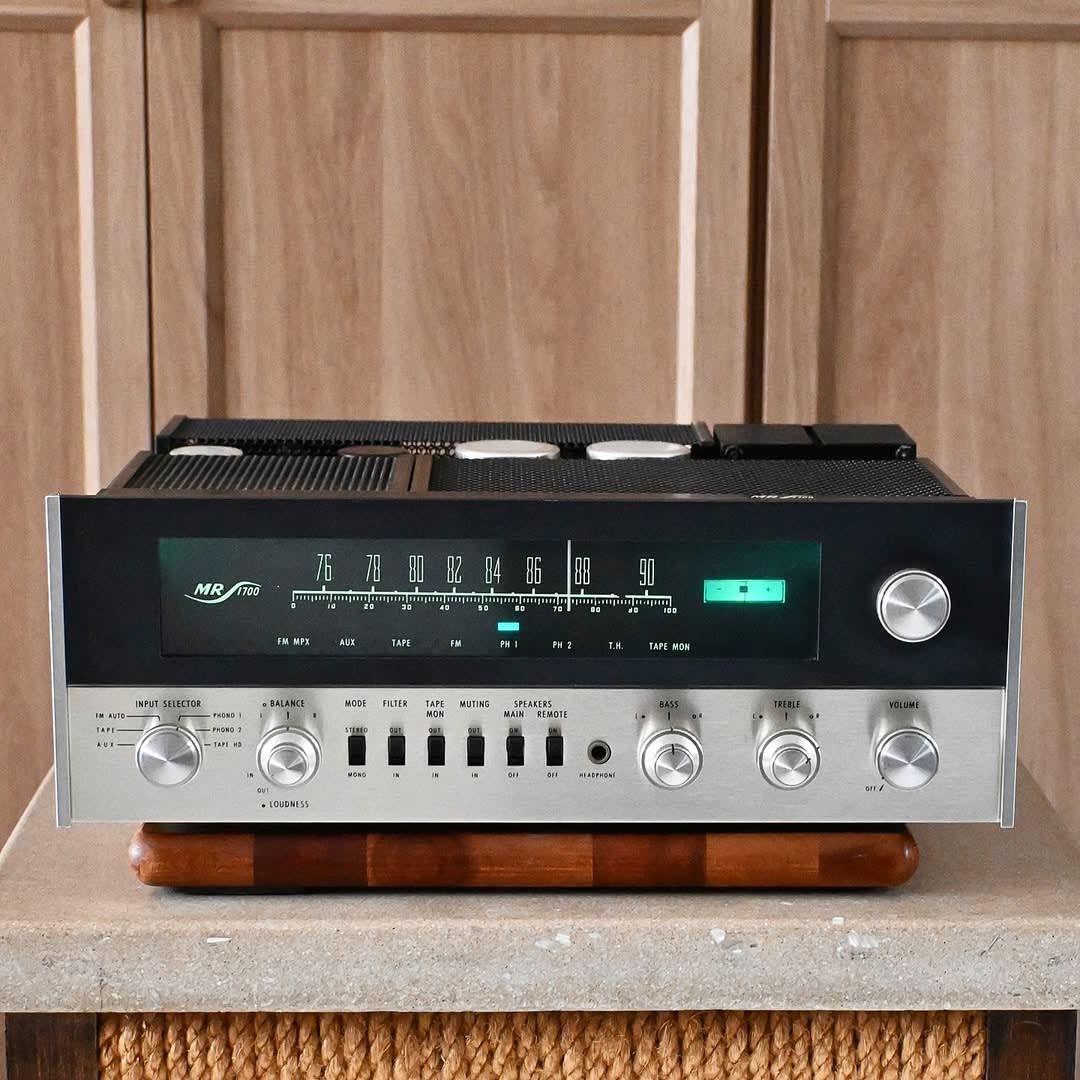
Pioneer SX-780 AM/FM Stereo Receiver
Vintage Pioneer SX-780 AM/FM stereo receiver, a classic silver-face receiver produced by Pioneer from 1978 to 1980 featuring analog signal and power meters, woodgrain side panels, and an output of 45 watts per channel. Continuous Power Output: 45 watts per channel minimum into 8 ohms (stereo, 20Hz–20kHz) with no more than 0.05% THD 45 watts per channel minimum into 4 ohms (stereo, 20Hz–20kHz) with no more than 0.08% THD Total Harmonic Distortion (THD): 0.05% (at rated power output) Frequency Response: 5Hz to 80,000Hz (+0dB, -1dB for Line) Damping Factor: 30 (20Hz–20kHz, 8 ohms) Speaker Load Impedance: 4 ohms minimum (supports Speaker pairs A, B, or A+B) Power Amplifier Circuitry: Darlington power IC packs (STK-0050) configured as a DC amplifier Audio Input Sensitivity & Signal-to-Noise Ratio Phono Input (MM): 2.5mV / 50k ohms (Max input level: 200mV) Line Inputs (AUX, Tape 1 & 2 Playback): 150mV / 50k ohms Signal-to-Noise Ratio (IHF-A): Phono (MM): 76dB Line: 95dB Output Level: 150mV (Tape Rec RCA outputs) FM & AM Tuner Sections FM Tuning Range: 88 MHz to 108 MHz FM Usable Sensitivity: 1.8µV FM Distortion: 0.07% (Mono) FM Signal-to-Noise Ratio: 80dB (Mono) AM (MW) Tuning Range: 535 kHz to 1,605 kHz 🎚️ Controls, Filters, & Connections Tone Controls: Bass: +8dB / -7dB at 100Hz Treble: +7dB / -6dB at 10kHz Loudness Contour: +6dB at 100Hz, +3dB at 10kHz (with volume dial at -40dB) Low Filter: 15Hz (6dB/octave subsonic filter) Physical Connections: Phono input, AUX input, two independent Tape Monitors, 1/4" headphone jack, chassis grounding post, and external AM/FM antenna inputs. Hardware & Dimensions Semiconductor Count: 5 x FETs, 11 x ICs, 26 x transistors, 22 x diodes Dimensions: 480 x 140 x 320 mm (18.9 x 5.5 x 12.6 inches) Weight: 11.2 kg (24.7 lbs) net Cabinet Finish: Walnut grain vinyl over a particleboard enclosure Power Requirements: 120V AC, 60Hz (Rated at 150W power consumption)

Vintage Pioneer SX-780 AM/FM stereo receiver, a classic silver-face receiver produced by Pioneer from 1978 to 1980 featuring analog signal and power meters, woodgrain side panels, and an output of 45 watts per channel.
Continuous Power Output:
45 watts per channel minimum into 8 ohms (stereo, 20Hz–20kHz) with no more than 0.05% THD
45 watts per channel minimum into 4 ohms (stereo, 20Hz–20kHz) with no more than 0.08% THD
Total Harmonic Distortion (THD): 0.05% (at rated power output)
Frequency Response: 5Hz to 80,000Hz (+0dB, -1dB for Line)
Damping Factor: 30 (20Hz–20kHz, 8 ohms)
Speaker Load Impedance: 4 ohms minimum (supports Speaker pairs A, B, or A+B)
Power Amplifier Circuitry: Darlington power IC packs (STK-0050) configured as a DC amplifier
Audio Input Sensitivity & Signal-to-Noise Ratio
Phono Input (MM): 2.5mV / 50k ohms (Max input level: 200mV)
Line Inputs (AUX, Tape 1 & 2 Playback): 150mV / 50k ohms
Signal-to-Noise Ratio (IHF-A):
Phono (MM): 76dB
Line: 95dB
Output Level: 150mV (Tape Rec RCA outputs)
FM & AM Tuner Sections
FM Tuning Range: 88 MHz to 108 MHz
FM Usable Sensitivity: 1.8µV
FM Distortion: 0.07% (Mono)
FM Signal-to-Noise Ratio: 80dB (Mono)
AM (MW) Tuning Range: 535 kHz to 1,605 kHz
🎚️ Controls, Filters, & Connections
Tone Controls:
Bass: +8dB / -7dB at 100Hz
Treble: +7dB / -6dB at 10kHz
Loudness Contour: +6dB at 100Hz, +3dB at 10kHz (with volume dial at -40dB)
Low Filter: 15Hz (6dB/octave subsonic filter)
Physical Connections: Phono input, AUX input, two independent Tape Monitors, 1/4" headphone jack, chassis grounding post, and external AM/FM antenna inputs.
Hardware & Dimensions
Semiconductor Count: 5 x FETs, 11 x ICs, 26 x transistors, 22 x diodes
Dimensions: 480 x 140 x 320 mm (18.9 x 5.5 x 12.6 inches)
Weight: 11.2 kg (24.7 lbs) net
Cabinet Finish: Walnut grain vinyl over a particleboard enclosure
Power Requirements: 120V AC, 60Hz (Rated at 150W power consumption)