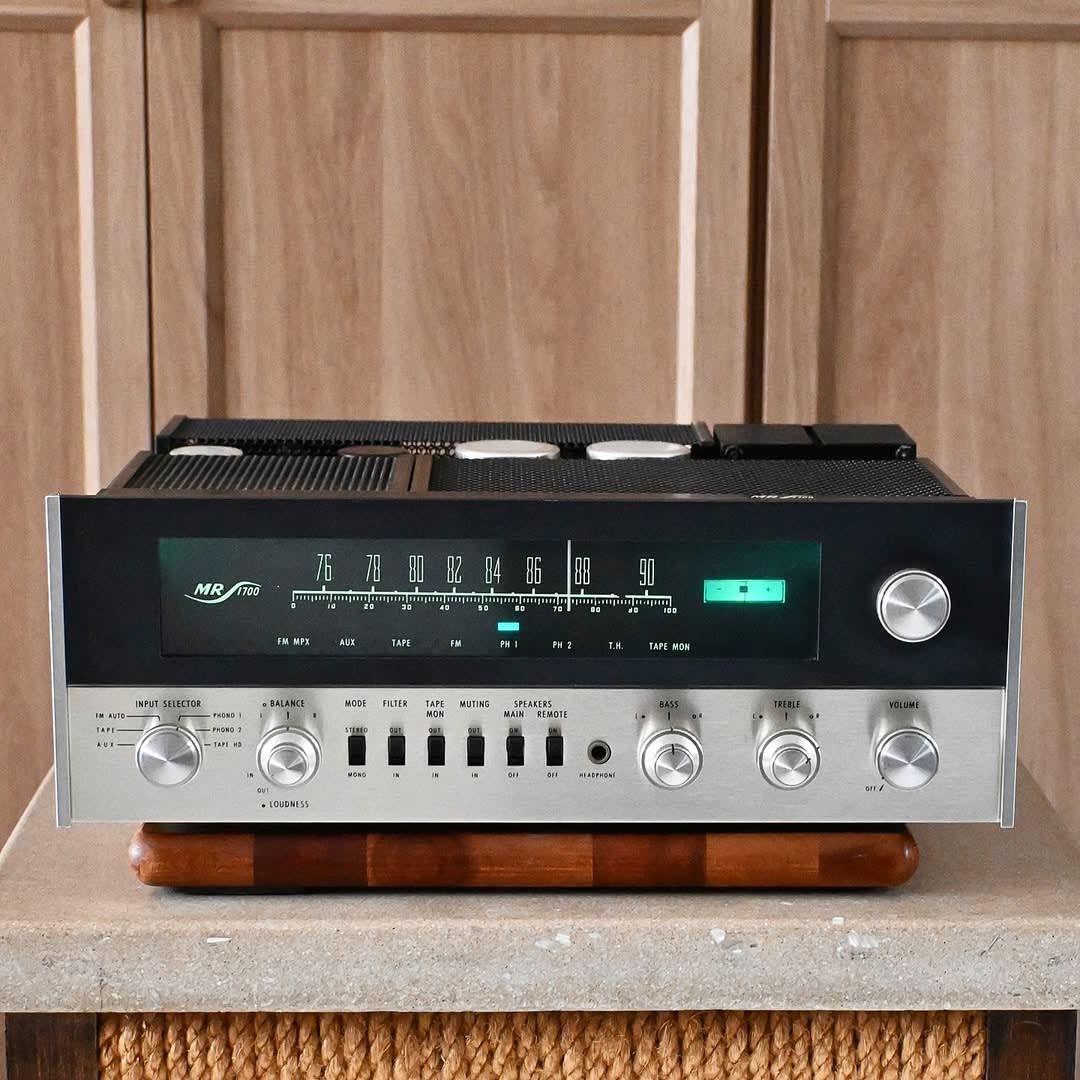
Kenwood KR-9600 Stereo Receiver
The Kenwood KR-9600 is one of the most famous "monster receivers" from the golden era of high-fidelity audio. Produced from 1976 to 1978, it was engineered to compete directly in the "receiver power wars" against legends like the Pioneer SX-1250 and Sansui 9090DB. Here is the complete, comprehensive breakdown of its technical specifications and feature set. Technical Specifications Power & Amplifier Section Continuous Power Output: 160 Watts per channel into 8 ohms (both channels driven, 20Hz to 20,000Hz) Total Harmonic Distortion (THD): 0.08% at rated power Intermodulation Distortion (IMD): 0.1% at rated power Frequency Response: Power Amp: 5Hz to 100,000Hz (+0dB, -1.5dB) Pre-amplifier (Phono): 20Hz to 20,000Hz (RIAA standard curve ±0.2dB) Damping Factor: 50 into 8 ohms (at 50Hz) Speaker Impedance Capability: 4 ohms to 16 ohms 📻 Tuner Section (FM & AM) FM Usable Sensitivity: 1.5µV (9.8 dBf) FM 50dB Quieting Sensitivity: Mono: 2.8µV (14.2 dBf) Stereo: 35µV (36.1 dBf) FM Signal-to-Noise Ratio (at 65dBf): 80dB (Mono), 75dB (Stereo) FM Capture Ratio: 1.0dB FM Alternate Channel Selectivity: 85dB FM Stereo Separation: 50dB at 1,000Hz; 45dB from 50Hz to 10,000Hz AM Usable Sensitivity: 15µV Inputs & Sensitivity (Preamplifier) Phono 1 & 2: 2.5mV / 50k ohms (Maximum input capability: 250mV at 1kHz, 0.08% THD) Aux: 150mV / 50k ohms Tape Playback (1, 2, and A/B front panel): 150mV / 50k ohms Microphone Input: 2.5mV / 50k ohms Physical & Power Consumption Power Source Requirements: AC 120V, 50/60Hz (North American Model) Power Consumption: 700 Watts at full power output Dimensions (W x H x D): 580 mm x 169 mm x 420 mm (approx. 22-7/8" x 6-5/8" x 16-1/2") Weight: 24 kg (approx. 53 lbs) Key Design & Functional Features True Dual-Mono Power Architecture Dual Power Supplies: Features two completely independent, massive power transformers and two separate sets of large electrolytic filter capacitors—effectively acting as two separate mono amplifiers sharing one chassis. This eliminates channel-to-channel crosstalk and maintains massive low-end bass control under heavy loads. Darlington Power Modules: Utilizes specialized Sanken TA-200W output IC blocks. Comprehensive Tone and Filtering Controls Triple Tone Controls: Individual click-stopped dials for Bass, Midrange, and Treble. Selectable Turnover Frequencies: Bass turnover can be switched between 150Hz and 400Hz. Treble turnover can be switched between 3kHz and 6kHz. Dual Subsonic & High Filters: Subsonic Filter: 18Hz (6dB/octave) to cut out low-end turntable rumble. High Filter: 8kHz (6dB/octave) to eliminate cassette tape hiss or scratchy vinyl noise. Loudness Control: 2-step loudness compensation switch to adjust tonal balance at low volumes. 🎛️ Signature "Sound Injection" & Mixing System Mic Mixing Layout: Features a front-panel microphone jack with an independent mic volume level knob. Sound Injection Circuit: Allows you to mix your voice or a live instrument over any active audio source (AM/FM radio, Phono, or Aux) while recording to a tape deck in real-time. Extensive Signal Routing Triple Speaker Switching: Terminals on the rear support three distinct sets of stereo speakers (A, B, C) with front-panel switching matrix configurations (A, B, C, A+B, A+C). Dual Phono Stages: High-quality phono preamps accommodating two separate turntables simultaneously. Tape Dubbing Matrix: Accommodates two rear tape decks plus a 3rd auxiliary tape input/output behind a front-panel flip cover. Allows bi-directional dubbing (Tape 1 to 2, or Tape 2 to 1) while listening to an entirely different source. Display & Metering Layout Dual VU Power Meters: Large analog, fast-responding power output meters calibrated directly in Watts into 8 ohms. Dual Tuning Gauges: Dedicated Signal Strength and Tuning Deviation (Center Tuning) meters for precise FM alignment. Aesthetic Illumination: Large, wide glass tuning dial scale backed by warm amber and soft blue illumination scheme.
SKU: N/A
Category: Receiver
 Kenwood
The Kenwood KR-9600 is one of the most famous "monster receivers" from the golden era of high-fidelity audio. Produced from 1976 to 1978, it was engineered to compete directly in the "receiver power wars" against legends like the Pioneer SX-1250 and Sansui 9090DB.
Here is the complete, comprehensive breakdown of its technical specifications and feature set.
Technical Specifications
Power & Amplifier Section
Continuous Power Output: 160 Watts per channel into 8 ohms (both channels driven, 20Hz to 20,000Hz)
Total Harmonic Distortion (THD): 0.08% at rated power
Intermodulation Distortion (IMD): 0.1% at rated power
Frequency Response:
Power Amp: 5Hz to 100,000Hz (+0dB, -1.5dB)
Pre-amplifier (Phono): 20Hz to 20,000Hz (RIAA standard curve ±0.2dB)
Damping Factor: 50 into 8 ohms (at 50Hz)
Speaker Impedance Capability: 4 ohms to 16 ohms
📻 Tuner Section (FM & AM)
FM Usable Sensitivity: 1.5µV (9.8 dBf)
FM 50dB Quieting Sensitivity:
Mono: 2.8µV (14.2 dBf)
Stereo: 35µV (36.1 dBf)
FM Signal-to-Noise Ratio (at 65dBf): 80dB (Mono), 75dB (Stereo)
FM Capture Ratio: 1.0dB
FM Alternate Channel Selectivity: 85dB
FM Stereo Separation: 50dB at 1,000Hz; 45dB from 50Hz to 10,000Hz
AM Usable Sensitivity: 15µV
Inputs & Sensitivity (Preamplifier)
Phono 1 & 2: 2.5mV / 50k ohms (Maximum input capability: 250mV at 1kHz, 0.08% THD)
Aux: 150mV / 50k ohms
Tape Playback (1, 2, and A/B front panel): 150mV / 50k ohms
Microphone Input: 2.5mV / 50k ohms
Physical & Power Consumption
Power Source Requirements: AC 120V, 50/60Hz (North American Model)
Power Consumption: 700 Watts at full power output
Dimensions (W x H x D): 580 mm x 169 mm x 420 mm (approx. 22-7/8" x 6-5/8" x 16-1/2")
Weight: 24 kg (approx. 53 lbs)
Key Design & Functional Features
True Dual-Mono Power Architecture
Dual Power Supplies: Features two completely independent, massive power transformers and two separate sets of large electrolytic filter capacitors—effectively acting as two separate mono amplifiers sharing one chassis. This eliminates channel-to-channel crosstalk and maintains massive low-end bass control under heavy loads.
Darlington Power Modules: Utilizes specialized Sanken TA-200W output IC blocks.
Comprehensive Tone and Filtering Controls
Triple Tone Controls: Individual click-stopped dials for Bass, Midrange, and Treble.
Selectable Turnover Frequencies:
Bass turnover can be switched between 150Hz and 400Hz.
Treble turnover can be switched between 3kHz and 6kHz.
Dual Subsonic & High Filters:
Subsonic Filter: 18Hz (6dB/octave) to cut out low-end turntable rumble.
High Filter: 8kHz (6dB/octave) to eliminate cassette tape hiss or scratchy vinyl noise.
Loudness Control: 2-step loudness compensation switch to adjust tonal balance at low volumes.
🎛️ Signature "Sound Injection" & Mixing System
Mic Mixing Layout: Features a front-panel microphone jack with an independent mic volume level knob.
Sound Injection Circuit: Allows you to mix your voice or a live instrument over any active audio source (AM/FM radio, Phono, or Aux) while recording to a tape deck in real-time.
Extensive Signal Routing
Triple Speaker Switching: Terminals on the rear support three distinct sets of stereo speakers (A, B, C) with front-panel switching matrix configurations (A, B, C, A+B, A+C).
Dual Phono Stages: High-quality phono preamps accommodating two separate turntables simultaneously.
Tape Dubbing Matrix: Accommodates two rear tape decks plus a 3rd auxiliary tape input/output behind a front-panel flip cover. Allows bi-directional dubbing (Tape 1 to 2, or Tape 2 to 1) while listening to an entirely different source.
Display & Metering Layout
Dual VU Power Meters: Large analog, fast-responding power output meters calibrated directly in Watts into 8 ohms.
Dual Tuning Gauges: Dedicated Signal Strength and Tuning Deviation (Center Tuning) meters for precise FM alignment.
Aesthetic Illumination: Large, wide glass tuning dial scale backed by warm amber and soft blue illumination scheme.